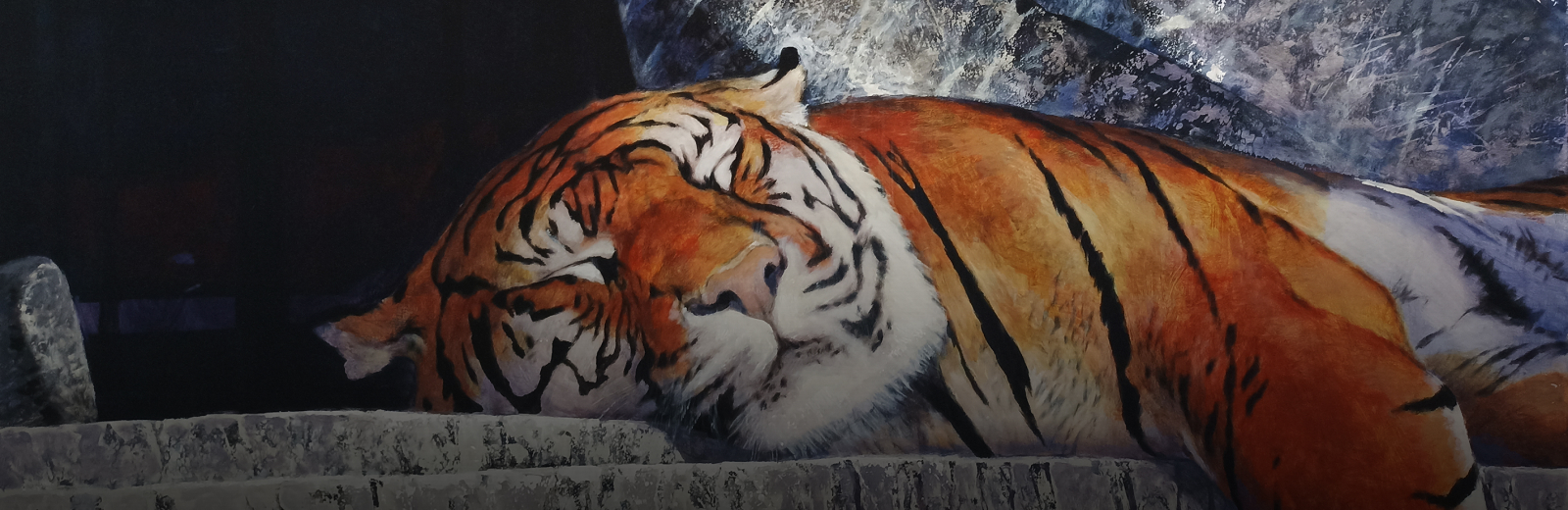
Erarta Museum of Contemporary Art presents Denis Saunin’s second solo show – a snapshot of a creative universe in which beast and vegetable are equally worthy of becoming mythological heroes
-
A modern take on the visual language of allegory
-
From form to meaning: composition as a first approximation, title as the key
-
Yearning for a totem: animals as figures of inner power
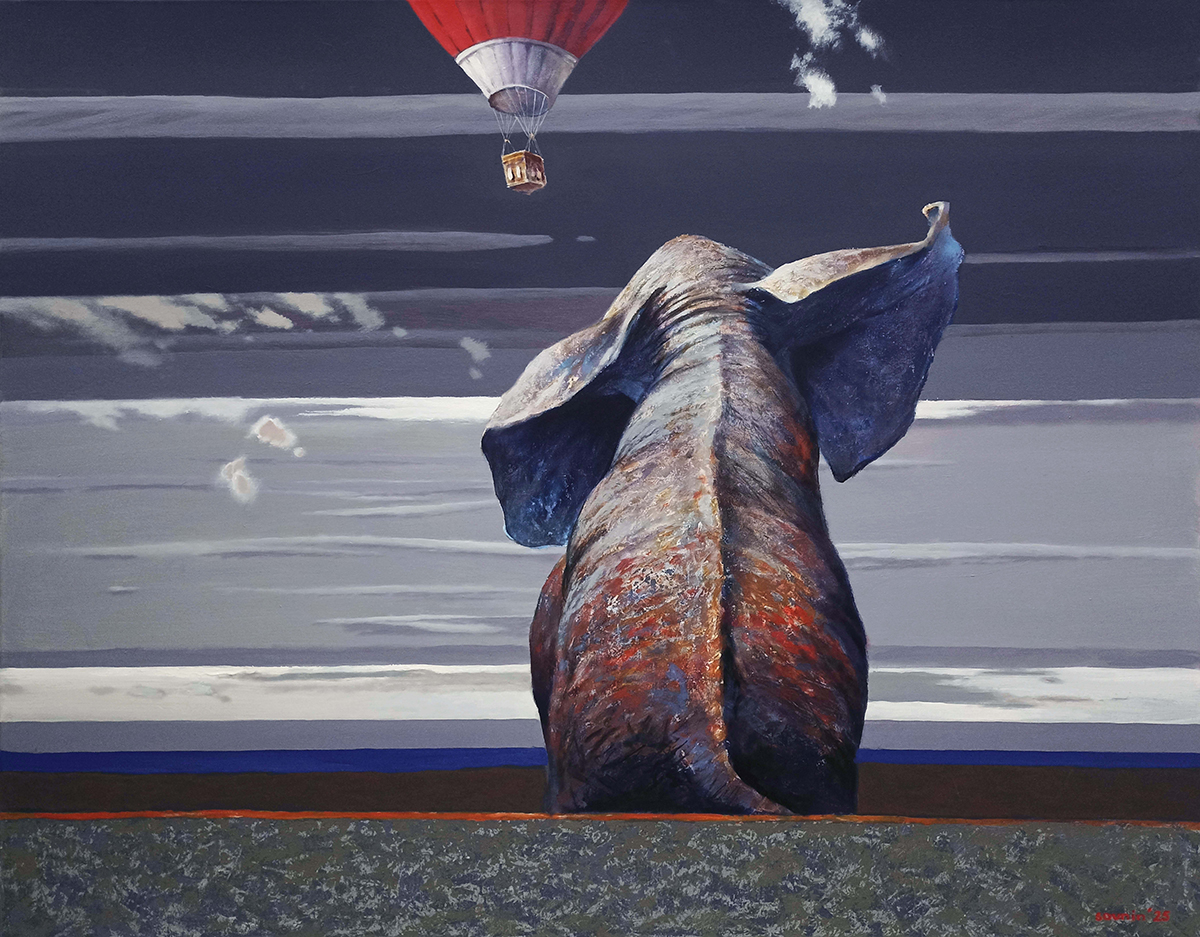
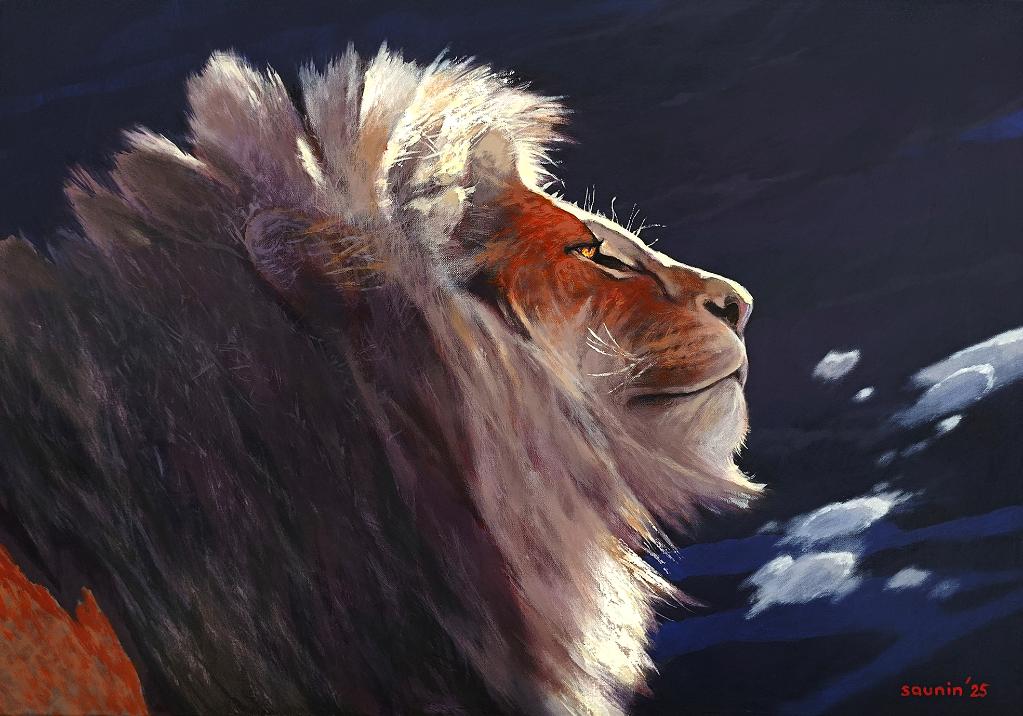
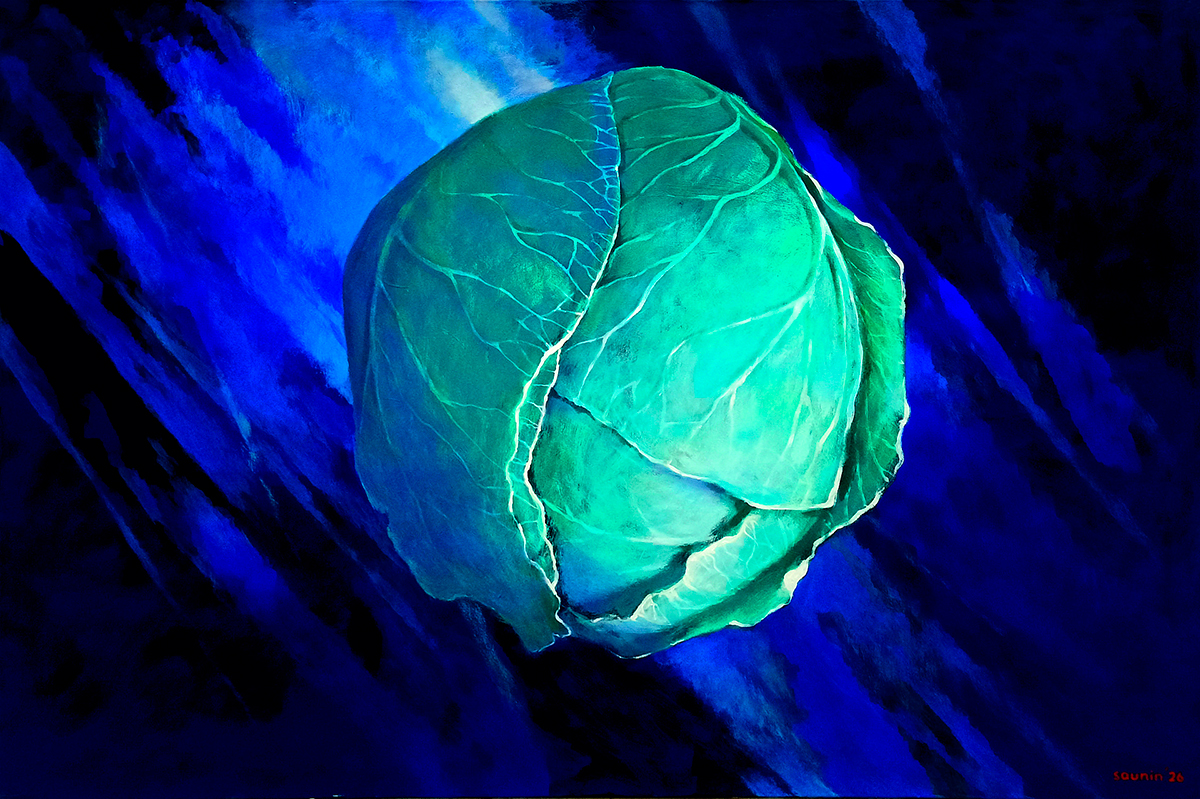
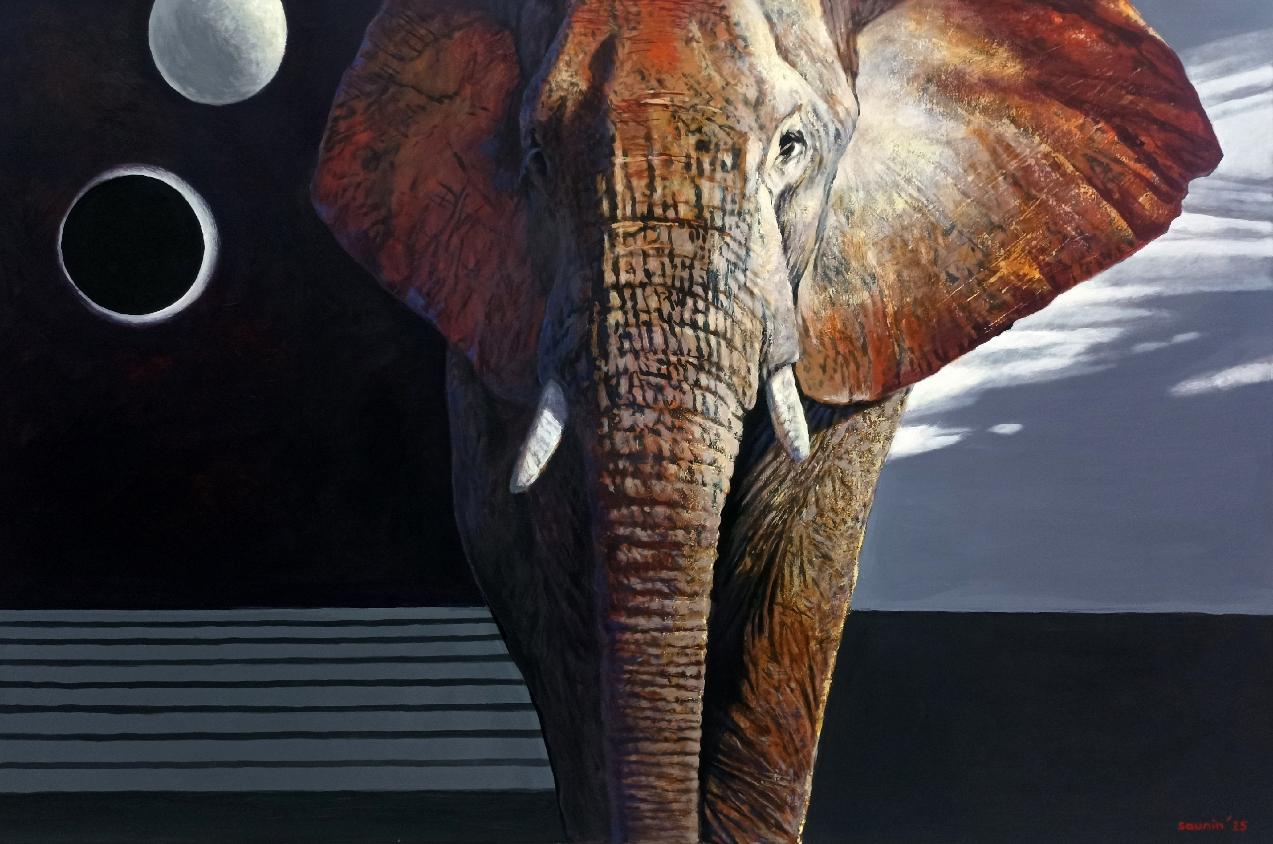
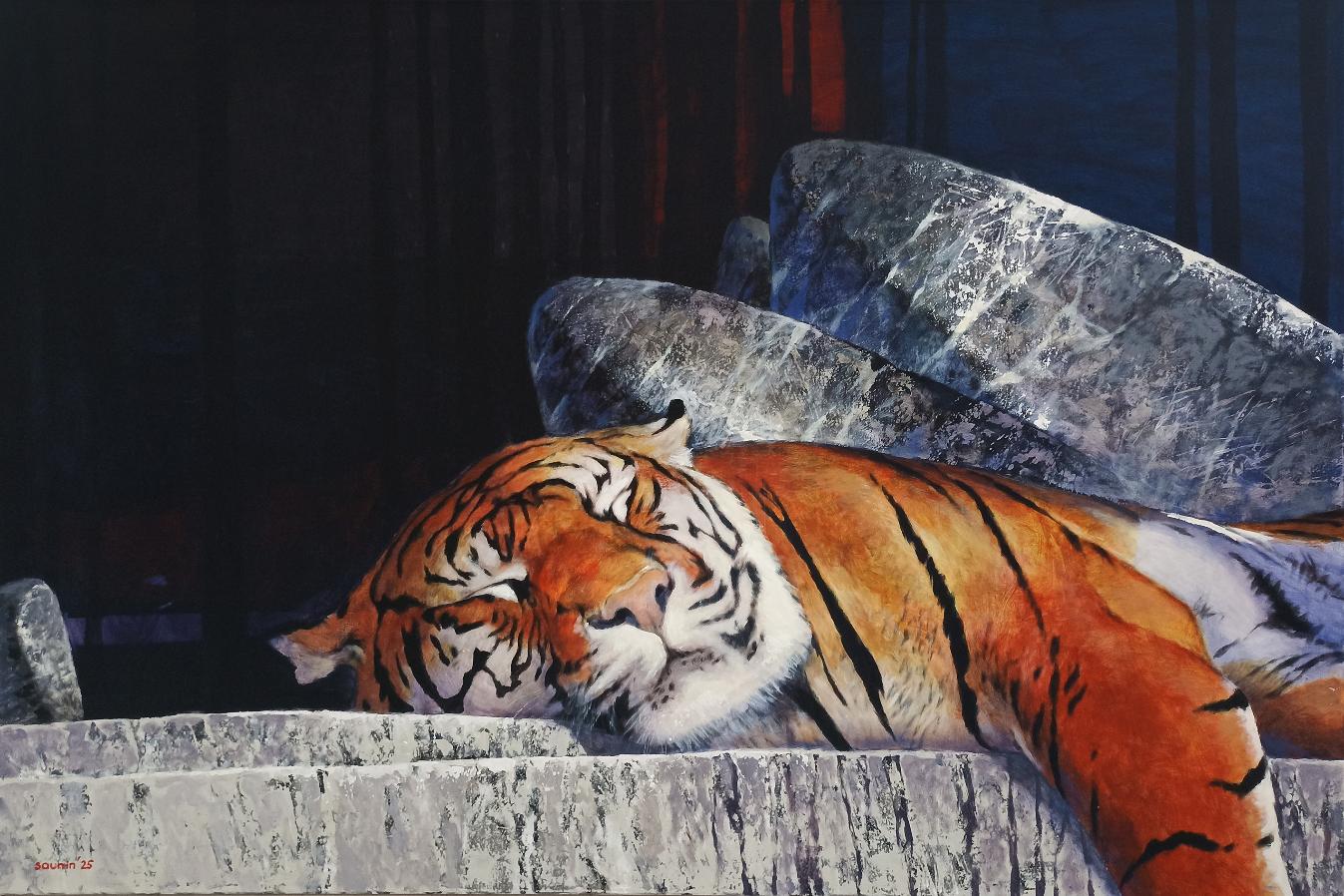
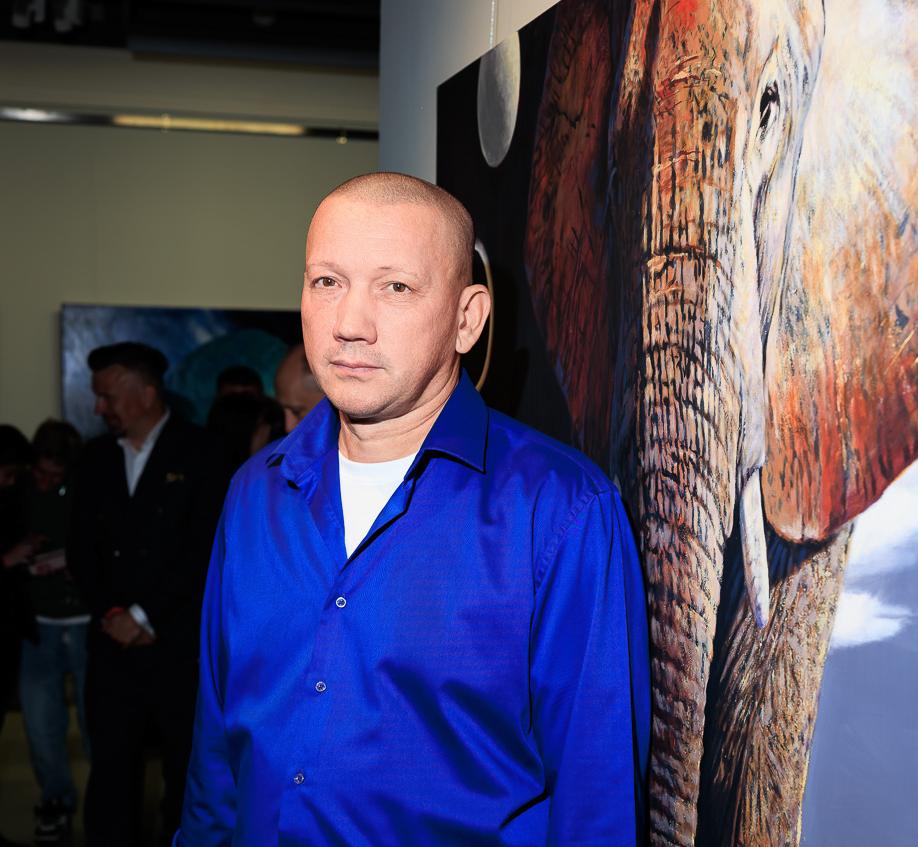
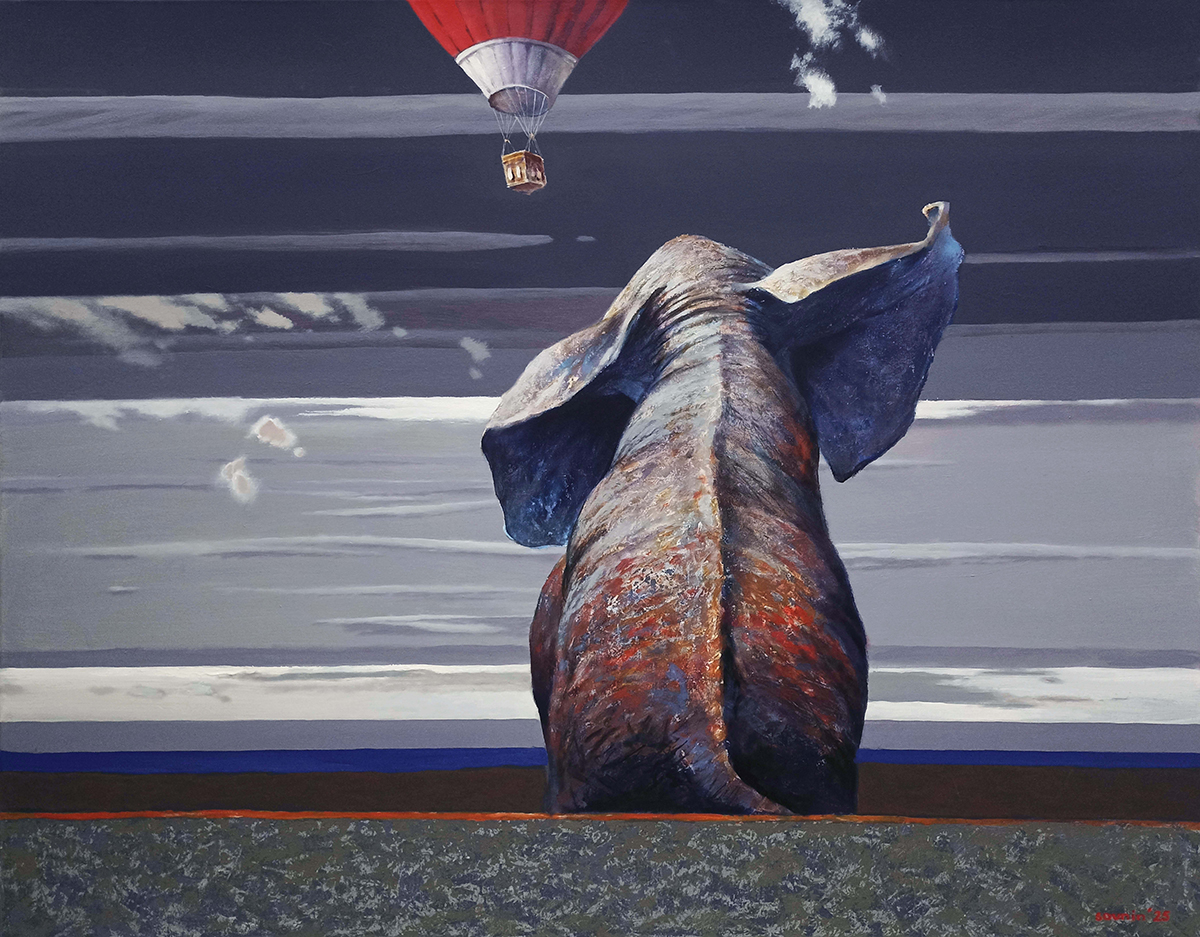
The exhibition with an absurdist title Elephant and Other Veg is Denis Saunin’s second solo show at Erarta Museum. The artist is primarily known for his desolate landscape paintings inspired by his travels through Mongolian steppes and paragliding experiences. In this new exhibition project, every artwork has a central protagonist – a tiger, an elephant, a hare, or a tomato.
Sometimes a carrot is only a carrot, and particularly so in visual arts when the painter is mostly preoccupied with spatial tasks at hand. This is reason enough for the red cucumbers to make an appearance on Denis Saunin’s canvases: in his case, colour is determined not by botany, but by creative artifice. A truly perceptive viewer, however, always strives for more. It is not enough to feast one’s eyes on the composition arranging the mirrorlike knife blade and a shower of carrots into a kind of a grid. The tomatoes plunging into water seem less a still life, more a genre painting. Within Saunin’s project, such imagery reflects human conditions, acting as a snapshot of the human soul.
The series featured in this exhibition reveals a yearning for a totem – a desire to find a guardian and protector. That is why Saunin’s animals are not just illustrative of human feelings: they also emerge as figures of inner power, representative of everyone’s fears, passions, and hopes. Perhaps this explains why tomatoes naturally belong here alongside tigers and elephants – in the artist’s world, beast and vegetable are equally worthy of becoming mythological heroes.
Needless to say, what we see here is not animalier art as we know it. Here, the animal receives a somewhat archaic treatment, being interpreted as an allegory of passions lying dormant deep within the human soul. All characters are graceful and full of dignity, even when finding themselves in such elated states as thirst or temptation. This sheds light on the artist’s own temperament, making these artworks brutally honest. At the same time, the language of allegory allows the viewer to partake in this experience. Is that the way we see submission, for instance? Do we share an affinity with the panicked hare dashing through the night?
Denis Saunin was born in 1976 in Biysk. After studying at the Visual and Graphic Arts Department of the Khabarovsk State Pedagogical University, he went on to graduate from the Painting Department of the Far Eastern State Institute of Arts in 1999. Between 2002 and 2005, he worked under the guidance of Anatoliy Levitin at the creative workshops of the Regional Division of the Russian Academy of Arts for the Urals, Siberia and Far East in Krasnoyarsk.
Since 2005, Denis has been living and working in St. Petersburg. In the same year, he joined the Artists’ Union of Russia. Saunin exhibits his art in regional, national, and international shows. His works were acquired by the State Russian Museum, Novosibirsk State Art Museum, Non-Conformist Art Museum at Pushkinskaya-10, and by private collectors in Russia and abroad.