Rob Woodcox
Unlimited Capabilities of the Body
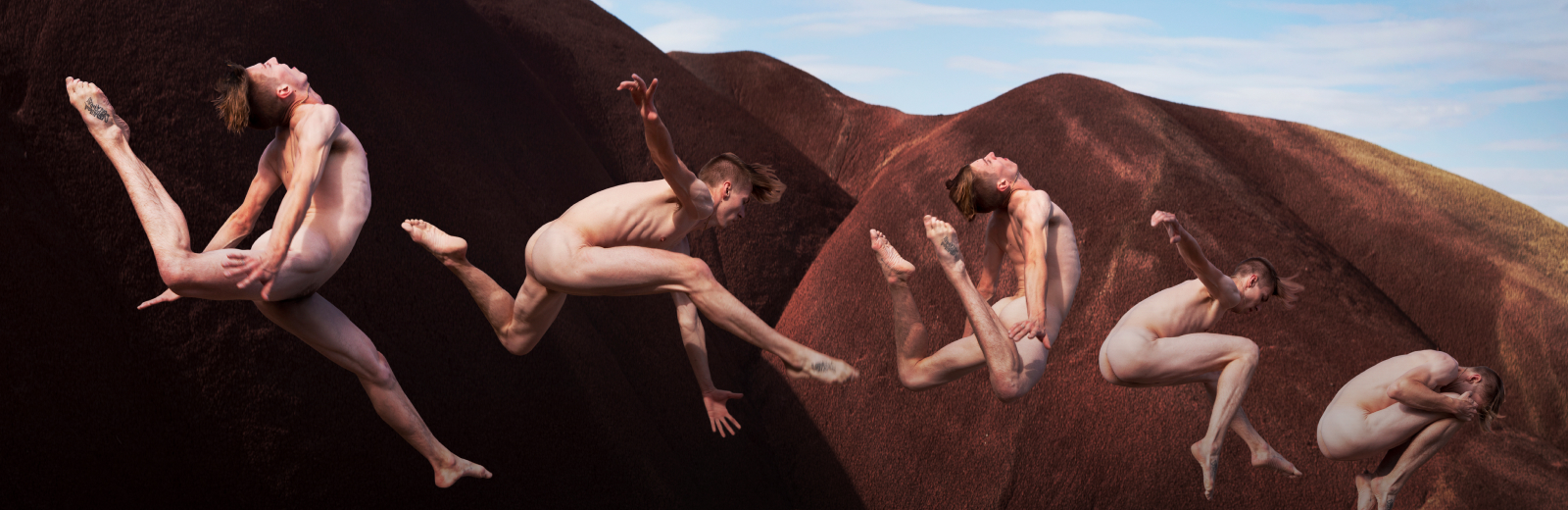
Erarta Museum of Contemporary Art presents an exhibition by the renowned photographer Rob Woodcox inviting us to see the human body as a fluid, ever-changing form encapsulating fragility, inner strength, and yearning for connection
-
Artworks inspired by nature, architecture, and dance
-
Surreal imagery, precise compositions, and poetic visions of the body as part of a larger ecological system
-
Signature blend of reality and illusion adding a cinematic and dreamlike dimension to the pictures
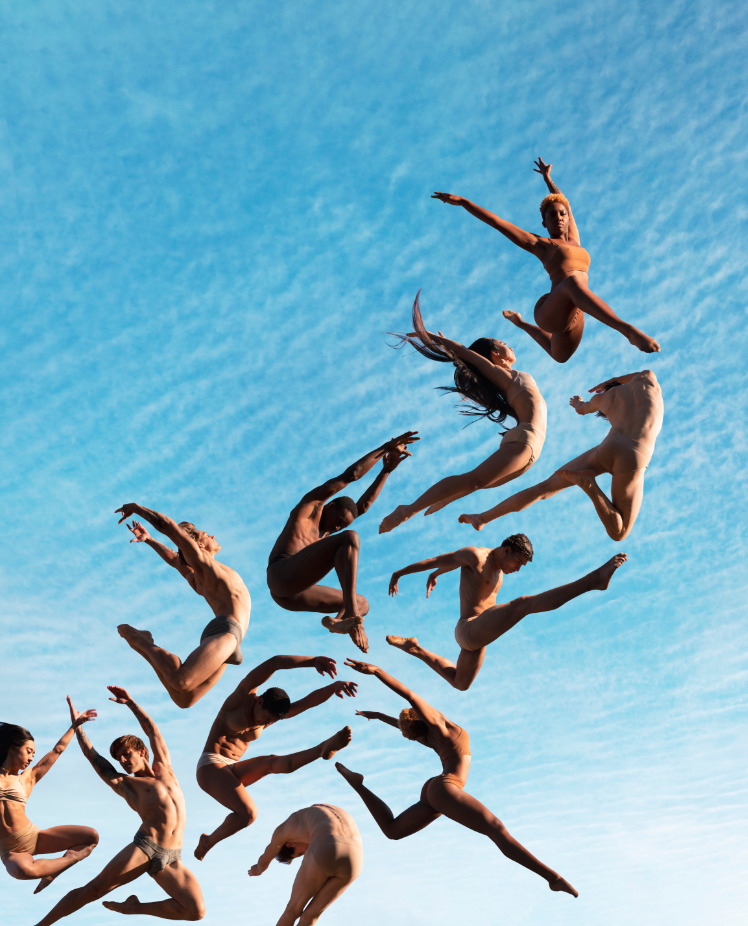
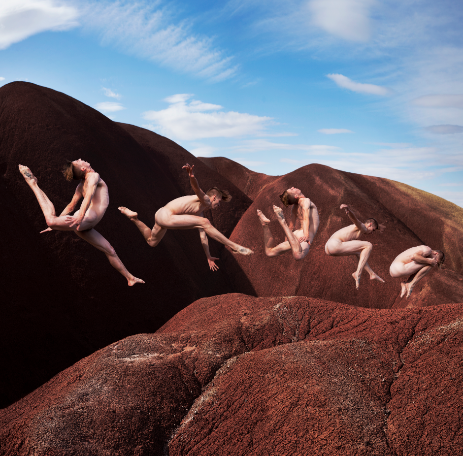
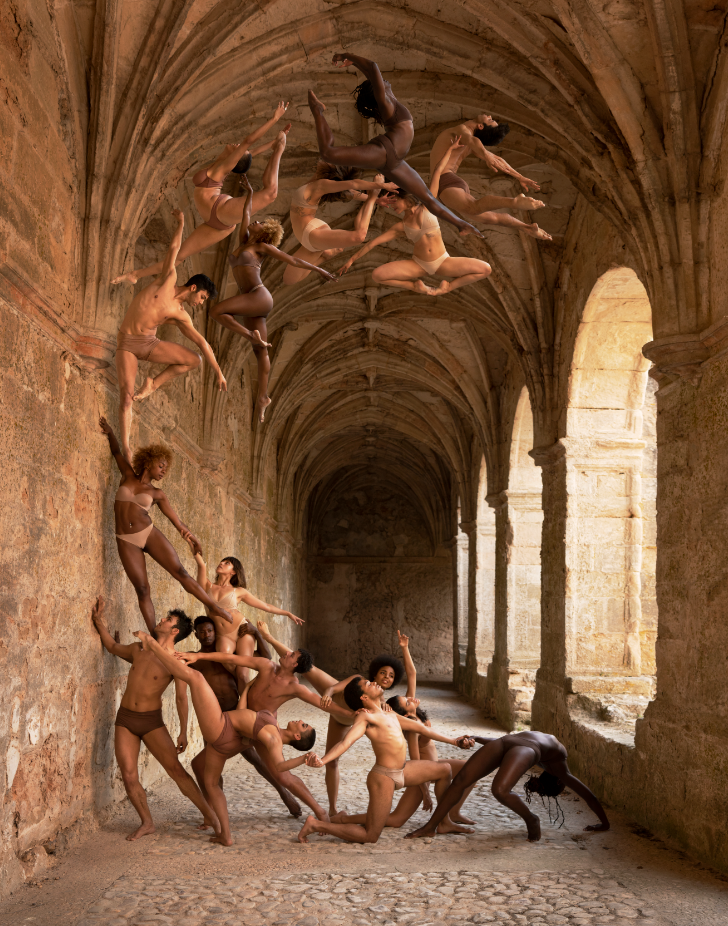
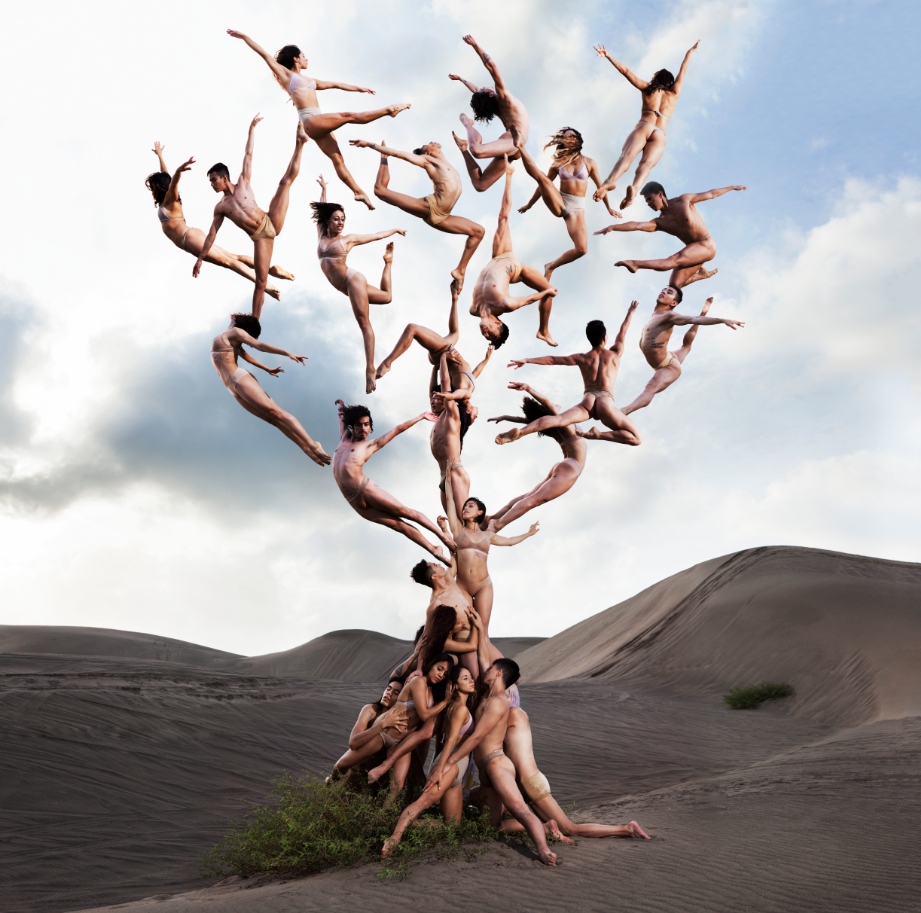
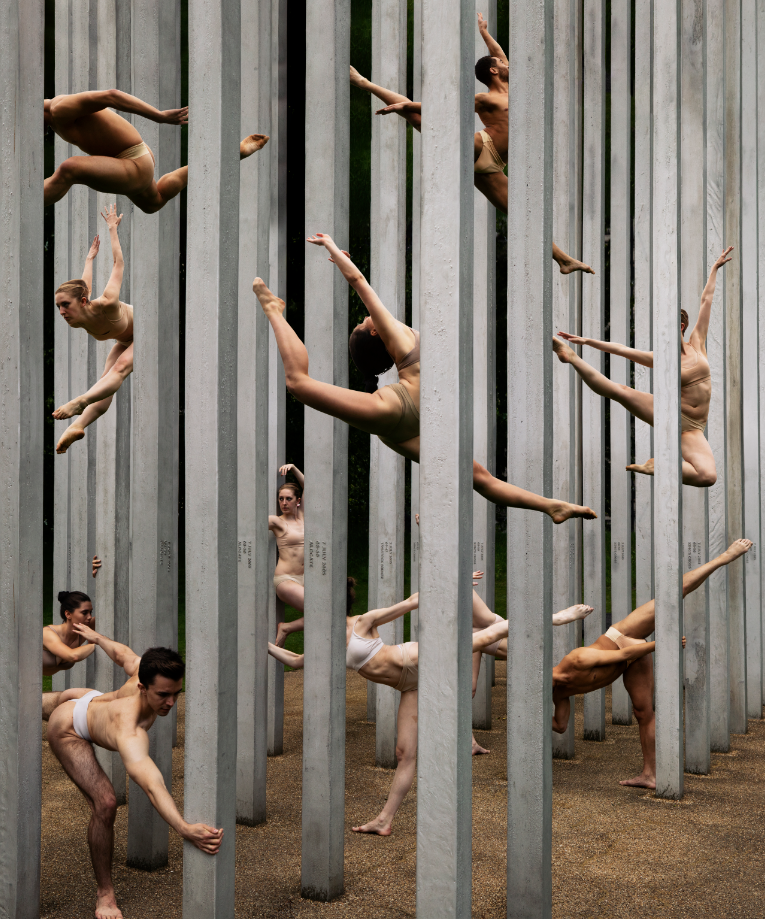
Rob Woodcox’s practice unfolds at the intersection of surrealism, choreography, magic realism, and environmental consciousness, where the human body becomes both sculptural form and emotional language. Across photography and film, Woodcox constructs dreamlike visual worlds in which bodies levitate, intertwine, fracture, and reassemble – not as acts of spectacle alone, but as meditations on connection, vulnerability, and collective existence. Drawing on dance, architecture, nature, and social activism, his images dissolve the boundaries between the physical and the symbolic, transforming the human body.
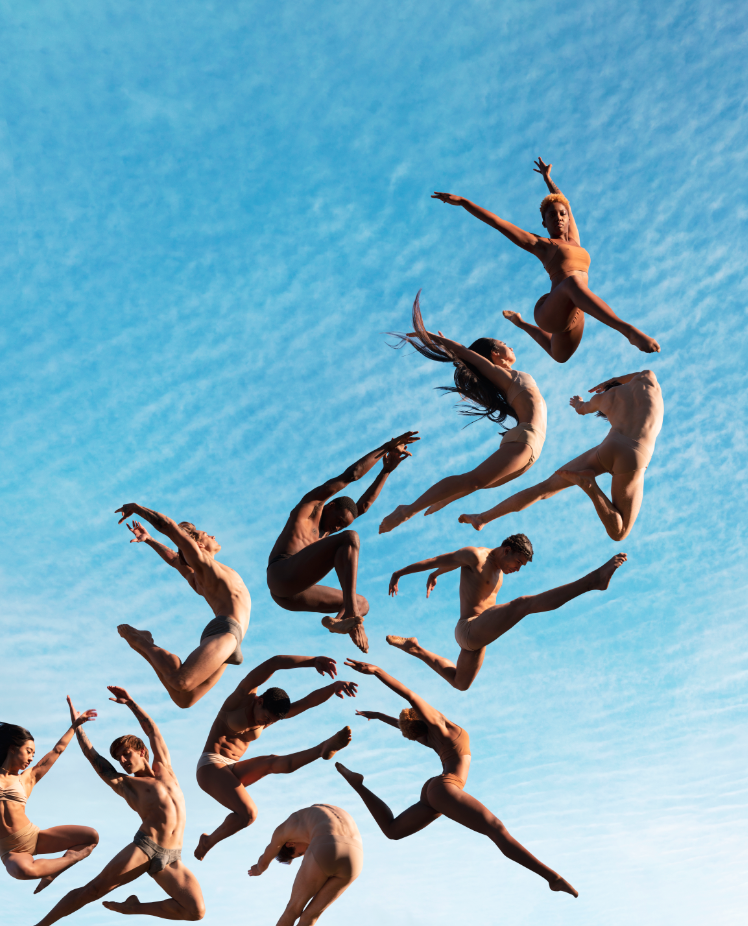
Working between Mexico City, Los Angeles, and New York, Woodcox approaches visual storytelling as both aesthetic inquiry and social practice. His compositions frequently place human figures within expansive natural landscapes: deserts, forests, rainforests, coastlines, and monumental architectural spaces, which become extensions of the body itself. In these environments, gravity appears suspended. Dancers spiral through monastic ceilings, bodies gather into tree-like structures, and impossible formations emerge with uncanny realism. Yet beneath the technical virtuosity of these works lies a deeply human proposition of interconnectedness.
Woodcox specifically draws on the methodology of surrealism and the literary discipline of magic realism. Surrealism was an art and cultural movement which developed after WWI in which artists sought to access unconscious thought through automatism, dream imagery, and irrational juxtaposition, attempting to capture their dreams and subliminal thoughts. According to their leader André Breton, those within the surrealist circle wanted to ‘resolve the previously contradictory conditions of dream and reality into an absolute reality, a surreality.’ Although established in Europe and popularized by artists such as Salvador Dalí, Max Ernst and René Magritte, surrealism also took a significant foothold in Mexico, as witnessed by the practices of Frida Kahlo, Günther Gerzso, and Manuel Álvarez Bravo. Mexico allowed for surrealism to evolve in a more diversified way, whilst referencing pre-Columbian mythology and traditions of tarot, alchemy, and the occult. Woodcox has explicitly stated that he is influenced by his subconscious and his dreams when choosing the format of his works. The oneiric and surrealistic tendencies in Woodcox’s work are most evident in the following works in the exhibition: Weathered Souls,Human Thread, Human Garden, and Release.
Additionally, Woodcox also indirectly references magic realism throughout his body of work. Magic realism, though later deeply associated with Latin American literature, originated in early twentieth-century European criticism (specifically in Germany, coined by Franz Roh in 1925 as ‘Magischer Realismus’) before flourishing in the works of writers across Mexico and Latin America. As a genre of fiction, it portrays fantastical realist elements in a real-world setting in such a way that the metaphysical anomalies are simply accepted by the protagonists and characters in the book. Hence, authors such as Juan Rulfo transformed rural landscapes into haunted emotional territories, most notably in Pedro Páramo, where the living and the dead coexist seamlessly.
Magic realism is also highly self-referential, typically incorporating metafiction, hence when one of the characters enters a parallel fictitious world, adding another layer of consciousness in the novel. Metafiction, as well as ontological instability is seen throughout the works of the Mexican writer Elena Garro, who introduced dreamlike temporal shifts and mystical dimensions into politically charged storytelling in her works such as Recollection of Things to Come. Woodcox’s works allude to magic realism in a very candid way – as improbably contorted and sinuous bodies, which, when amalgamated, create recognizable, yet abstract shapes. It appears they are all digitally altered, and yet, when discussing his methodology, the artist specifies that all his models are meticulously posed. Using everything from ladders to professional acrobats, he manages to capture the exact bending of the human body as contextualised by an unconventional background.
Woodcox’s choice of medium, in his own words, was also influenced by the works of Annie Leibovitz, Tim Walker, Brooke Shaden, Alex Stoddard, and Lissy Elle. The artist spends half his time scouting locations personally and then posing and photographing his models, typically using his Canon 5D Mark II and softboxes as he prefers to maximise the natural light. Once a photograph has been taken, Woodcox chooses compositions, expands images, composites and touches up colours and complexions for up to two to five hours per photo. Hence, although the photos look entirely simulated, they are in fact only somewhat adapted in Photoshop from meticulously posed real models in physical surroundings. This further reveals the cinematic dimension of Woodcox’s practice, with his photographs hovering between reality and illusion.
Central to Woodcox’s work is also the belief that humanity and nature exist within the same energetic continuum. This celebrated Bodies of Light series envisions communities of bodies merging into organic forms, suggesting ecosystems rather than individuals. The recurring motif of weightlessness becomes a metaphor for transformation – for liberation from social constructs, emotional burdens, and inherited divisions – while simultaneously carrying an undercurrent of fragility and longing. While Woodcox’s imagery celebrates interconnectedness, harmony, and the poetic potential of human connection, it also acknowledges the darker realities of communal power: oppression, exclusion, ecological destruction, and social fragmentation.
Ultimately, this exhibition presents Rob Woodcox’s work as an invitation to reconsider the body not as an isolated entity, but as part of a larger ecological and emotional system. Through images that are at once intimate and monumental, fragile and architectural, he asks us to imagine what forms of solidarity might emerge if we understood ourselves – and one another – as bodies of light.
Rob Woodcox (b. 1992) is an internationally acclaimed American visual artist, photographer, filmmaker, and educator whose multidisciplinary practice explores themes of human connection, identity, mental health, movement, and environmental awareness. Over the past decade, Woodcox has established himself as one of the most recognizable contemporary photographic artists working across fine art, fashion, dance, and film, with exhibitions and screenings presented throughout Europe, North America, Latin America, and Asia.
Known for his cinematic compositions and emotionally charged imagery, Woodcox has taught thousands of students across six continents and has collaborated with major global brands and institutions including Apple, Universal Pictures, Capitol Records, Nike, SKIMS, the Royal Ballet, and Dr. Barbara Sturm. His acclaimed photographic monograph Bodies of Light was released in 2020, further cementing his reputation for combining poetic visual storytelling with socially conscious narratives.
In recent years, Woodcox has expanded his practice into filmmaking and directing. His directorial debut, We Are Molecular (2021), which was created in partnership with the Royal Ballet in London and Dr. Barbara Sturm, marked a significant evolution in his artistic career. He followed this with the music video Spiral alongside musician Ry X in 2022, and later premiered his first short film Honey to the Moon in 2023. The film screened at numerous international festivals, including the Provincetown International Film Festival, and continues to tour globally.
Woodcox’s work has been exhibited in prestigious museums, galleries, and art fairs including the State Hermitage Museum in St. Petersburg, PHotoESPAÑA in Madrid, Frieze No. 9 Cork Street in London, Art Basel Miami , NFT Paris, ZonaMaco, and the Leonora Carrington Museum in Mexico. His exhibitions often merge photography, installation, movement, and immersive narrative, reflecting a deeply humanistic and emotionally resonant artistic language.
Alongside his artistic practice, Woodcox remains an influential cultural voice through lectures, publications, podcasts, and collaborations with international media including Vogue, Vanity Fair, GQ, Elle, People Magazine, Business of Fashion, and Nowness. Today, he continues to develop both personal and commercial projects that bridge contemporary art, cinema, performance, and social dialogue on a global scale.